Maruti Suzuki S-Presso : In the bustling streets of India’s cities, where every inch counts and fuel bills hit hard, the Maruti Suzuki S-Presso remains a go-to pick for smart buyers.
Launched back in 2019 as a quirky mini-SUV, this little hatchback has carved out a loyal following with its tall stance, peppy performance, and unbeatable value. Even as 2026 unfolds, it’s holding strong against flashier rivals, bolstered by recent offers and steady sales.
A Design That Stands Tall and Tough
Picture this: you’re weaving through Delhi’s chaotic traffic, and heads turn as your boxy, upright hatchback commands the road like a mini-SUV.
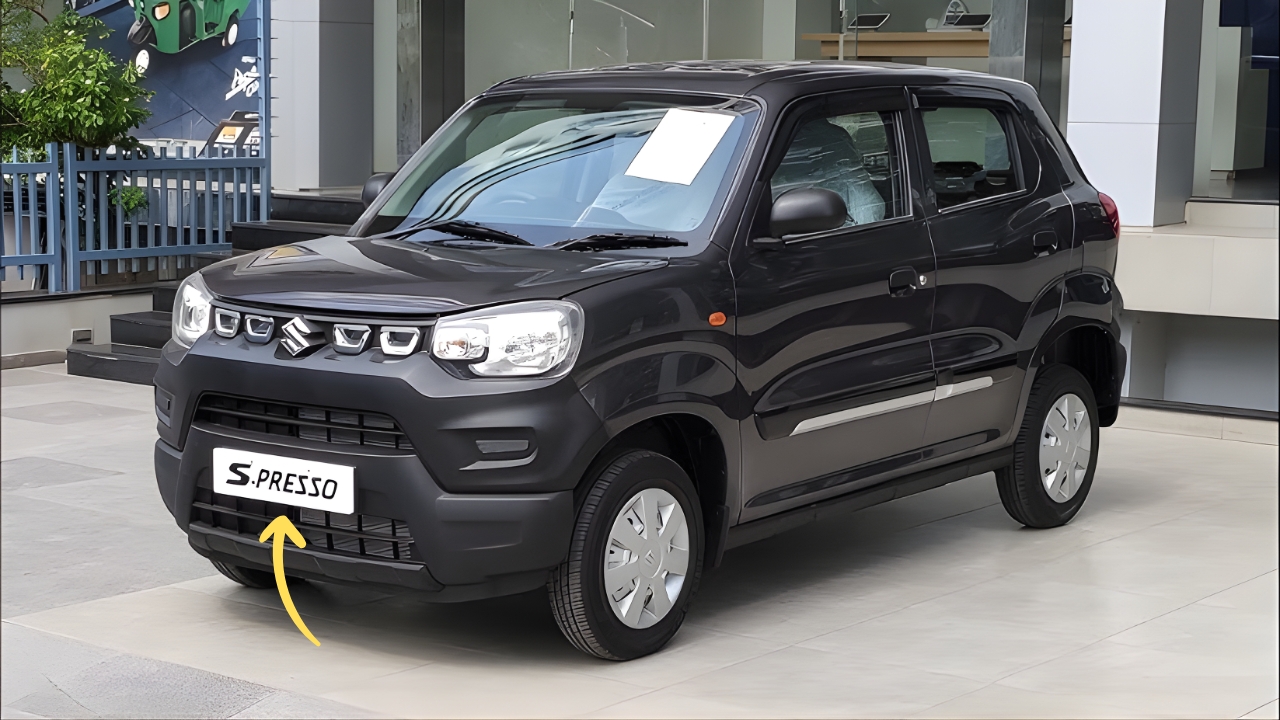
The S-Presso’s squarish wheel arches, signature C-shaped LED tail lamps, and twin-chamber headlamps give it that rugged vibe without pretending to be a full-fledged crossover.
At 3,565mm long with 180mm ground clearance, it shrugs off potholes better than most city cars, making it a favorite for uneven Indian roads.
What keeps it fresh? Maruti’s tweaks over the years, like the SUV-inspired front fascia and electrically adjustable ORVMs, blend style with practicality.
Colors like Metallic Silky Silver or Solid Fire Red pop against urban backdrops, and while it’s not winning design awards, its bold personality suits first-time buyers who want something fun and functional.
Also Read: Maruti E Vitara premium electric SUV comes with 543km of range, features is comfortable
Inside, the airy cabin surprises with best-in-class rear legroom and a spacious 239L boot—perfect for weekend grocery runs or family picnics.
Power and Efficiency for Everyday Hustle
Under the hood beats a familiar 1.0-litre K10C Dual Jet petrol engine, churning out 68hp and 91Nm—enough zip for city sprints without drama.
Paired with a 5-speed manual or AGS (that’s Maruti’s AMT for effortless shifts), it feels lively in traffic, aided by idle start-stop tech that saves fuel on red lights. Claimed mileage hits 25.3kmpl for petrol AMT variants, a real-world saver when petrol prices sting.
CNG fans rejoice: the bi-fuel option drops to 56hp but delivers 32.73km/kg, ideal for high-mileage commuters in Delhi-NCR.
Dual VVT ensures smooth revs, and features like hill-hold assist (on select trims) make parking on slopes a breeze. It’s no highway rocket, but for 80% city use, this setup nails reliability and low running costs—Maruti’s secret sauce.
Also Read: Hyundai Creta rain sensing wipers, LED projector headlamps and 6 airbags for safety
Safety Gets a Much-Needed Boost
Early days weren’t kind; a 2022 Global NCAP test slapped it with a 1-star adult rating, sparking debates on build quality. But Maruti listened.
By 2024, ESP became standard across the board, joining dual airbags, ABS with EBD, reverse sensors, and seatbelt reminders. The HEARTECT platform disperses crash energy better now, and a South African test later earned 3 stars—progress, if not perfection.
Higher trims add speed-sensing door locks and pedestrian protection, giving peace of mind to families. It’s no armored tank, but for the price, these upgrades make it safer than before.
Owners report confident braking and stability in rain-slicked monsoons, proving Maruti’s focus on real-world Indian conditions.
Features That Punch Above Weight
Step inside, and the S-Presso feels bigger than it is. A 7-inch SmartPlay Studio touchscreen brings Android Auto/Apple CarPlay, steering-mounted controls keep eyes on the road, and manual AC chills the cabin fast. Front power windows, a digital cluster, and USB ports cover basics without bloat.
Top VXi+ variants spoil with auto gear shift modes and a 2-speaker system for Bollywood blasts. It’s not luxe—hard plastics rule—but utility spots abound, from door pockets to rear armrests. For tech-savvy urbanites, voice commands and Bluetooth make it connected enough for calls and nav.
Also Read: Mahindra Scorpio Classic Indian families favorite SUV with 2.2L engine, look is fabulous
Sales Surge Signals Staying Power
2025 ended on a high for Maruti, with 18 lakh units sold—their best ever. The S-Presso rode the wave: December tallied 3,396 units, nearly doubling year-on-year, thanks to GST tweaks and small-car revival. February 2026 brought offers up to Rs 37,500, sparking showroom buzz amid entry-level demand.
Into 2026, monthly figures hover around 1,500-2,000, holding steady despite micro-SUV rivals like Tata Punch or Hyundai Exter.
Priced from Rs 3.5 lakh (ex-showroom), it’s India’s cheapest car, drawing budget buyers who skipped pricier EVs or SUVs. Maruti’s vast service network seals the deal—no downtime worries.
Facing Rivals in a Crowded Ring
The S-Presso squares off against Renault Kwid, Maruti Alto K10, and WagonR. Kwid matches the fun factor but lags in service ease; Alto K10 offers six airbags but less space. Tata Tiago brings polish, yet S-Presso wins on mileage and price—starting under Rs 4 lakh on-road in Delhi.
Facelift whispers persist—Jimny-inspired renders hint at LED projectors and chunkier cladding, possibly by late 2026. Until then, Dream Edition specials (like 2024’s) keep it exciting with accessories. In a market shifting to hybrids, its CNG edge shines for green-ish wallets.
Maruti Suzuki S-Presso : Why It Still Rules Urban Roads
From Delhi cabs to young families, the S-Presso embodies no-fuss motoring. Its tall perch aids visibility in jams, light controls suit new drivers, and efficiency crushes running costs—think Rs 3,560 average service over five years. Critics nitpick refinement or highway poise, but for 90% of buyers, it’s spot-on.
Also Read This : 2026 Bugatti Hyper RV W16 engine, modular kitchen, king size bed and look is luxury
As March 2026 hits, with Y43 micro-SUV rumors brewing, the S-Presso proves timeless. Grab one now for those February deals before stocks dwindle. It’s not perfect, but in India’s mass market, perfect is overrated—practical wins every time.